
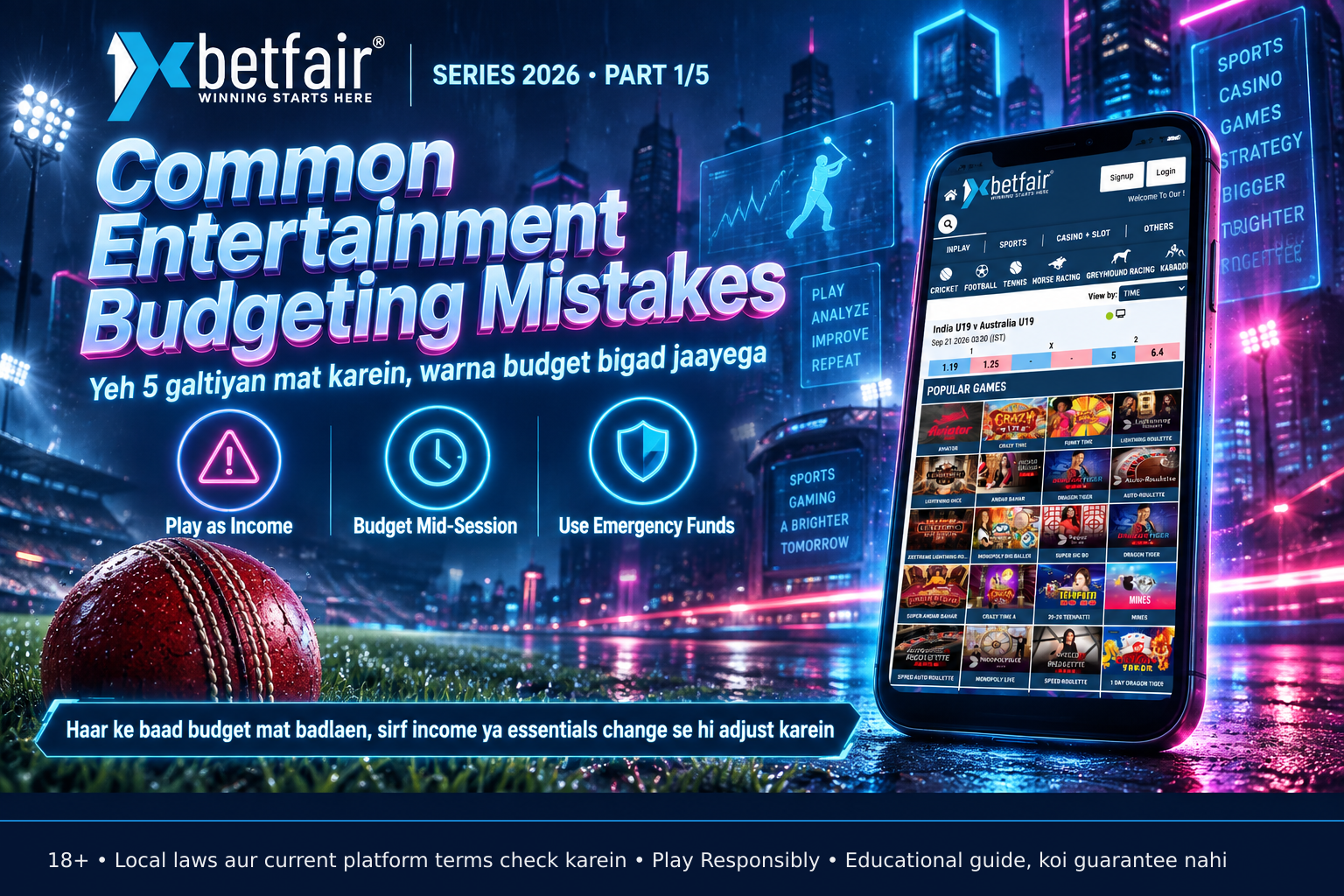
Quick answer: Entertainment spending is money set aside for fun activities like streaming, dining out, or gaming, and it should come from discretionary income after essentials are covered. Treating play as a fixed cost helps keep it enjoyable and prevents it from becoming a financial strain. This guide explains how to set a realistic entertainment budget, why chasing losses breaks the budget mindset, and what checks to make before each session. Key takeaways – Entertainment budget comes from money left after rent, bills, food, and savings – Play is a cost, not a way to earn or recover money – Set the budget before the week starts, not during losing streaks – Use a pre-session checklist to confirm limits and device safety – Review spending weekly and adjust only when income or essentials change
Opening
Raat ke 9 baje hain, aapne apna phone uthaya aur 1xbetfair.com par cricket market khola. Thoda sa relax karne ka mann hai, lekin pichhle do din se balance kam ho raha hai. Agle hafte ka budget soch rahe hain ki kitna paisa entertainment ke liye rakhna chahiye. Yeh guide aapko batayega ki entertainment spending kaise plan karein, jisse aapki financial health bani rahe aur play sirf mazaak rahe. Yeh koi sure-shot formula nahi, bas ek practical framework jisse aap apne limits samajh sakein.
What It Is and Why It Matters
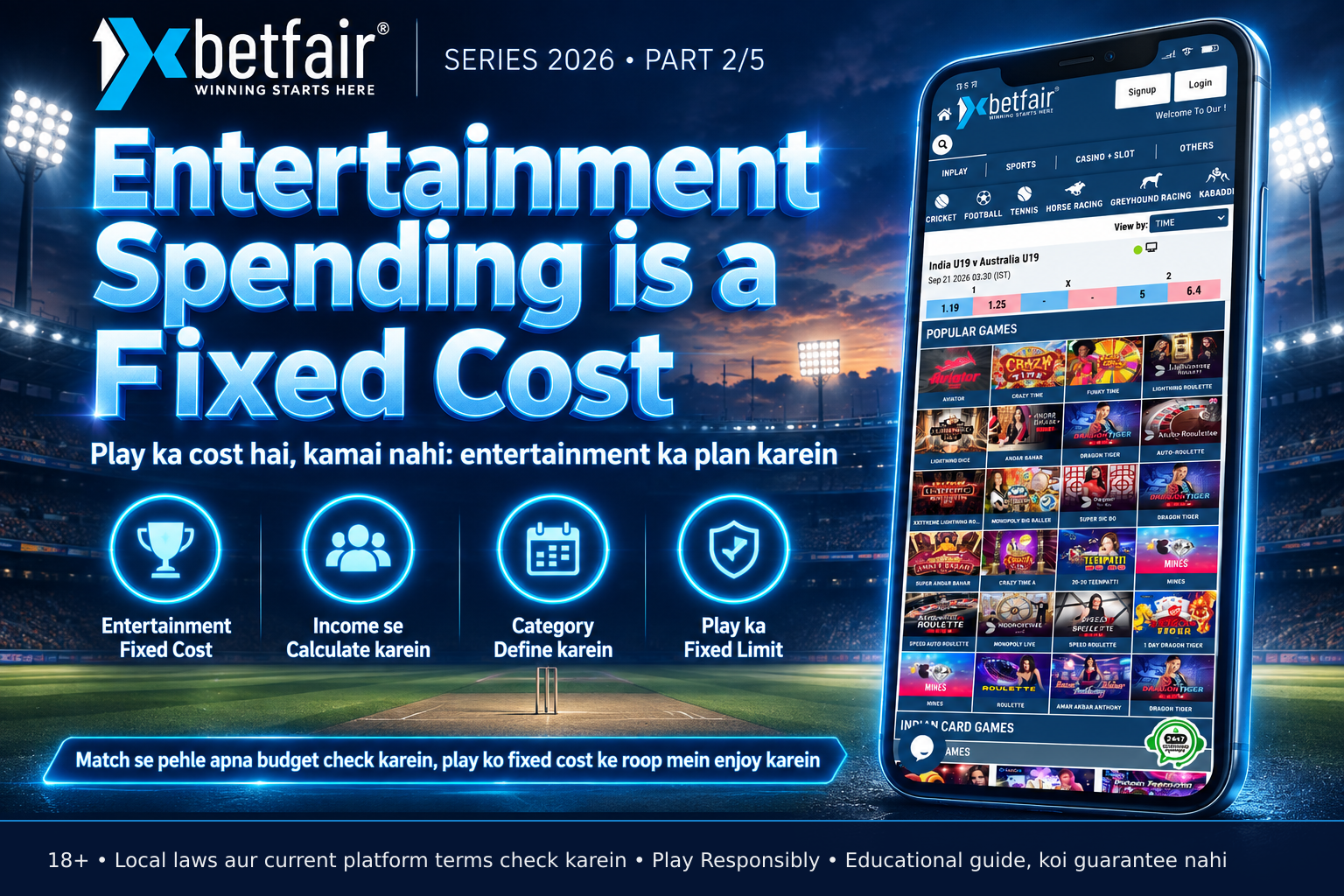
Entertainment spending is the portion of your discretionary income allocated to leisure activities — including online gaming, movies, subscriptions, or dining out. It is not an investment or a source of income. When you treat play as a fixed cost, like your Netflix bill or monthly movie ticket, you remove the pressure to "win back" losses. This mindset keeps gambling within the realm of entertainment, where the cost is the price of the experience, not a gamble on financial return. Without this boundary, entertainment spending can creep into essential funds, leading to stress and impaired decision-making. Setting a clear limit protects both your bank balance and your enjoyment.
5 Core Checks for Entertainment Budgeting
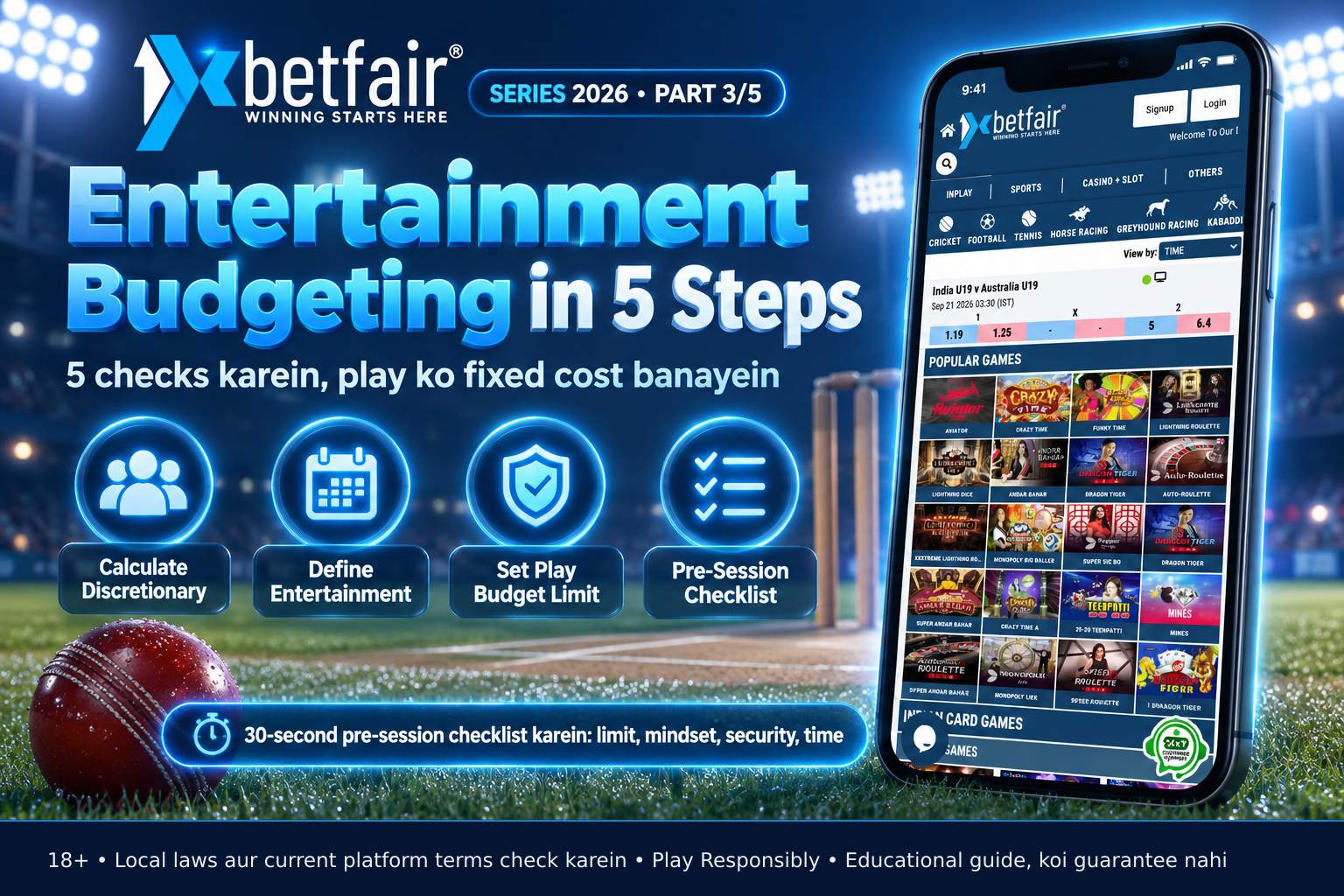
### 1. Calculate Your Discretionary Income
Start with your monthly take-home pay after tax. Subtract all essential expenses: rent or EMI, utilities, groceries, transport, insurance, and minimum debt payments. What remains is your discretionary income. From this, allocate a portion to entertainment — this includes everything from streaming services to casual play. There is no universal percentage; it depends on your goals, savings targets, and lifestyle. The key is that this money is already spared after necessities.
### 2. Define Your Entertainment Categories
List all leisure activities you enjoy: OTT platforms, music subscriptions, dining out, hobbies, and online play. Assign a monthly amount to each based on past spending or planned use. For example, if you typically spend ₹1,500 on Netflix and Spotify combined, and ₹1,000 on eating out, those are fixed entertainment costs. Play on 1xbetfair.com should be one line item in this list, not an open-ended category. This prevents one activity from absorbing the entire entertainment budget.
### 3. Set a Fixed Monthly Limit for Play
Decide how much of your entertainment budget you want to allocate to online gaming. This amount should be what you are comfortable losing entirely, as there are no guarantees of return. Once set, treat it like any other subscription — pay it upfront mentally at the start of the month. If you use it early, wait until the next cycle to replenish. Do not top up during a losing streak hoping to change the outcome; that turns entertainment into a recovery attempt.
### 4. Use a Pre-Session Checklist
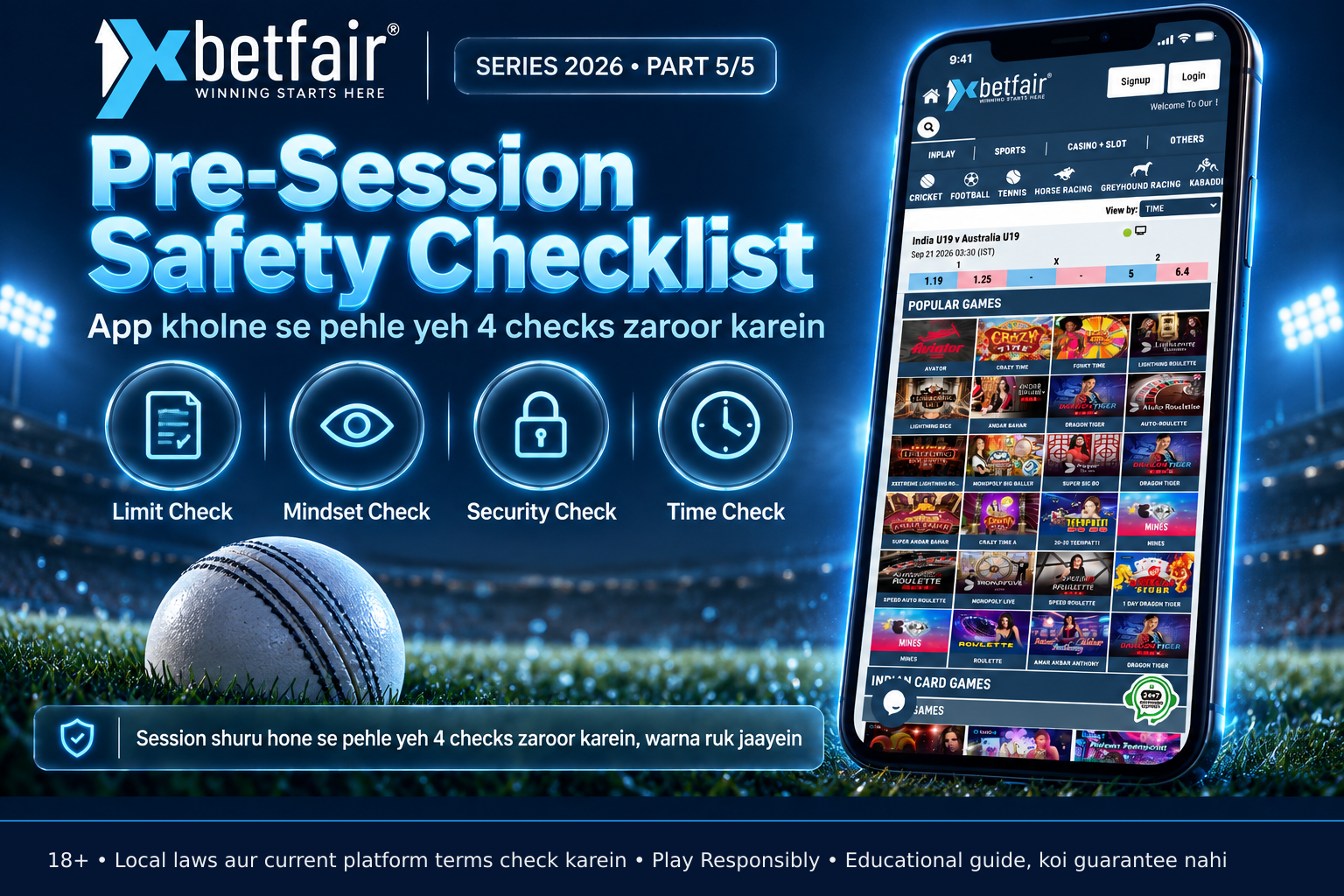
Before opening the app or site, run a quick 30-second check:
- Is this session within my pre-set entertainment limit for today/this week?
- Am I playing for fun, not to recover a previous loss?
- Is my device secure (official app, HTTPS, 2FA enabled)?
- Have I set a session time or loss limit in my account settings?
If any answer is no, pause and reassess. This simple ritual reinforces the budget boundary.
### 5. Review and Adjust Only at Fixed Intervals
Review your entertainment spending once a week or at the end of the month. Compare actual spend to your plan. If you consistently overspend, reduce the limit next cycle. If you underspend, you may choose to reallocate — but never increase the play budget to chase a win. Adjustments should only come from changes in income, essential costs, or financial goals, not from session outcomes.
How Entertainment Budgeting Works in Practice
Entertainment budgeting treats play like any other hobby cost. Imagine your monthly discretionary income is ₹20,000. After setting aside ₹5,000 for savings and ₹3,000 for unexpected costs, you have ₹12,000 left for leisure. You decide:
- ₹4,000 for OTT and music
- ₹3,000 for dining out
- ₹2,000 for hobbies (books, sports gear)
- ₹3,000 for online play
This ₹3,000 is your fixed entertainment cost for play. If you spend it in the first week, you wait until next month to play again — unless you reduce another entertainment category to stay within the ₹12,000 total. You do not add extra funds hoping to "make it back." The outcome of any session does not change the budget; the budget controls the session.
Device and Account Security
A budget only works if your account is secure. Always access 1xbetfair.com through the official website (verify the URL begins with https://1xbetfair.com) or the official app from your device’s app store. Never install APKs from third-party sites. Enable two-factor authentication (2FA) using an authenticator app, not SMS if possible. Never share your OTP, PIN, or password. Log out after each session on shared devices. These steps protect your funds and ensure your budget stays intact — security breaches can erase limits instantly.
Common Mistakes to Avoid
- Treating play as income: Believing you "should" win back losses turns entertainment into a financial obligation.
- Budgeting during a session: Setting limits after losses have already occurred reacts to emotion, not plan.
- Using emergency funds: Dipping into rent, bill, or grocery money to continue playing breaks the entertainment boundary.
- Ignoring small spends: Multiple ₹100 transactions add up; track all entertainment spending in one place.
- Changing limits after a loss: Increasing your play budget to recover defeats the purpose of having a limit.

Pre-Session Checklist Table
| Checkpoint | Status (✓/✗) | Action if No |
|---|---|---|
| Within weekly entertainment limit | Pause and review budget | |
| Playing for fun, not to recover loss | Take a break, reassess mindset | |
| Official app or HTTPS site used | Close and reopen via secure channel | |
| 2FA enabled on account | Enable in security settings | |
| Session time or loss limit set | Set in account tools before starting |
Brand Section
This article is for 1xbetfair.com users. For current terms, bonus details, or feature availability, always check the official platform. Any mention of offers must be read directly from 1xbetfair.com and is subject to their terms and conditions. Never rely on third-party summaries for financial or gameplay decisions.
Call to Action
Set your entertainment budget for the coming week before your next session — use the 5 Core Checks to guide you.
FAQ
How do I know how much to allocate to play from my entertainment budget? There is no fixed rule. Look at your total discretionary income after essentials, then decide what portion you are comfortable allocating to leisure activities, including play. Treat it as a cost you are willing to spend for enjoyment, not as an investment with expected return.
What if I use my entire play budget early in the month? Wait until the next budget cycle to replenish it. Do not add extra funds hoping to change outcomes. You may reduce spending in another entertainment category (like dining out) if you want to play sooner, but never exceed your total entertainment limit.
Is it okay to increase my play budget after a win? Only if your discretionary income has increased or you have reallocated from another entertainment category. Never raise the limit based on session results — wins are random and do not justify higher risk.
Should I track every small transaction for play? Yes. Small spends (₹50, ₹100) can accumulate quickly and blur your limit. Use a notebook, spreadsheet, or budget app to record all entertainment spending in one place for accurate review.
Can I use money saved for bills or rent if I lose my play budget? No. Entertainment spending must come only from discretionary income after essentials are covered. Using bill or rent money turns play into a financial risk and violates responsible budgeting.
How often should I review my entertainment budget? At least once a month, or weekly if you are new to budgeting. Compare actual spending to your plan and adjust only if your income, essential costs, or financial goals have changed — not because of wins or losses.
What is the difference between entertainment spending and gambling as income? Entertainment spending is a fixed cost for leisure, like a movie ticket. Gambling as income implies expecting regular returns to cover expenses, which is unrealistic and dangerous due to the random nature of outcomes.
Do bonuses or promotions affect my entertainment budget? Bonuses are part of the platform’s offering and should be reviewed under their terms. They do not change your personal budget — your limit remains what you set from discretionary income, regardless of any promotional credit.
How do I stop play from feeling like a necessity? If you feel anxious when not playing or play to relieve stress from losses, pause and reassess. Entertainment should feel optional and enjoyable. Take a break, review your budget, and return only when it feels like a choice, not a habit driven by loss recovery.
Is setting a loss limit the same as setting an entertainment budget? A loss limit is a session tool that helps you stay within your entertainment budget for that specific time. Your entertainment budget is the broader monthly or weekly allocation. Use both: set your monthly play limit, then use in-session tools to stick to it.
Where can I verify my account security settings on 1xbetfair.com? Log in to your account, go to the Security or Account Settings section, and check for 2FA status, login history, and connected devices. Always ensure you are on the official site (https://1xbetfair.com) before entering any details.
Final Takeaway
Treat play as a fixed entertainment cost, not a way to earn or recover money. Set the budget before the week starts, stick to it, and review only when your financial situation changes — never based on session outcomes. This keeps play fun, safe, and within your control.
Related reading
- Krishna Janmashtami 2026 Special — Festival Se Digital Entertainment Tak Games, Fun & Responsible Online Play Ka Complete Guide (1xbetfair.com)
- Pocket Casino & Live Betting ID How Mobile Gaming Is Changing the Future of Online Entertainment Mobile Gaming Ka Naya Daur, Smartphone Jo Ban Gaya Aapka Personal Stadium Aur Live Casino (1xbetfair.com)
- Pocket Se Powerhouse Tak, Mobile Gaming Kaise 2026 Mein Online Gaming Industry Ko Completely Transform Kar Raha Hai? (1xbetfair.com)
- Ganesh Chaturthi 2026: Tradition Se Digital Era Tak Festival Culture, Technology & Online Entertainment Kaise Change Ho Raha Hai? (1xbetfair.com)
Visit the official 1xbetfair Customer Care site: 1xbetfair.me. 18+ only. Please play responsibly.